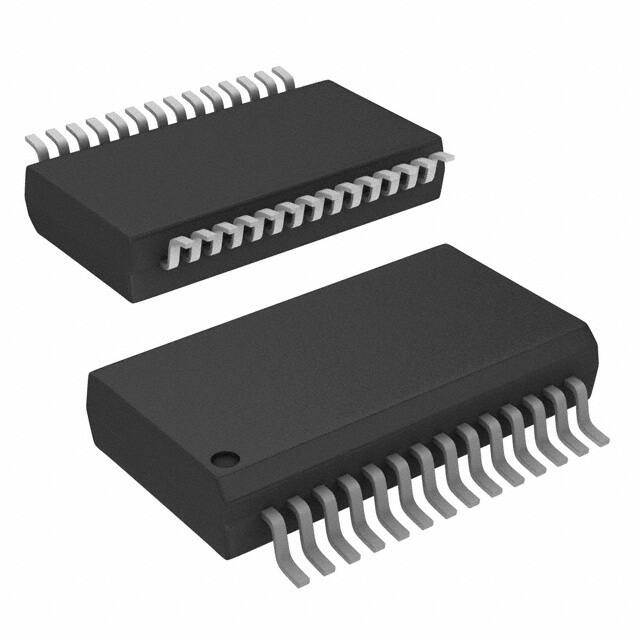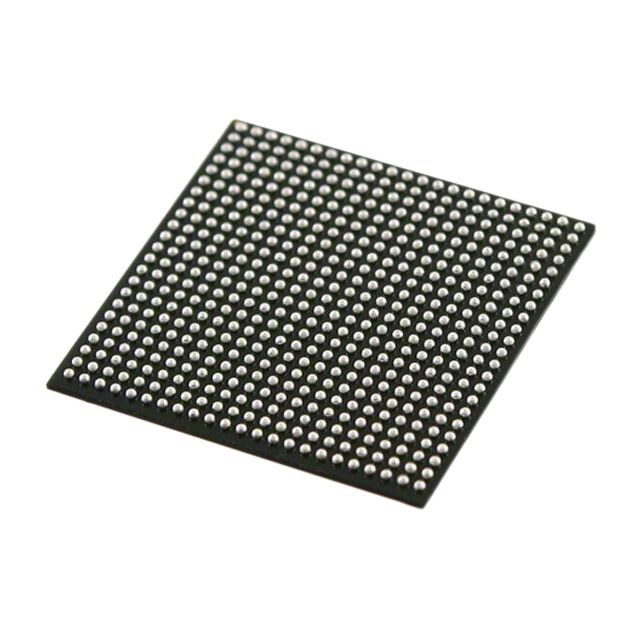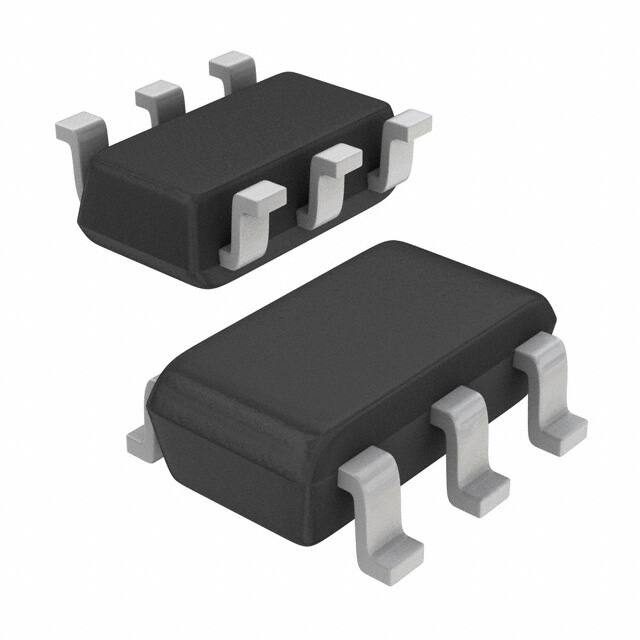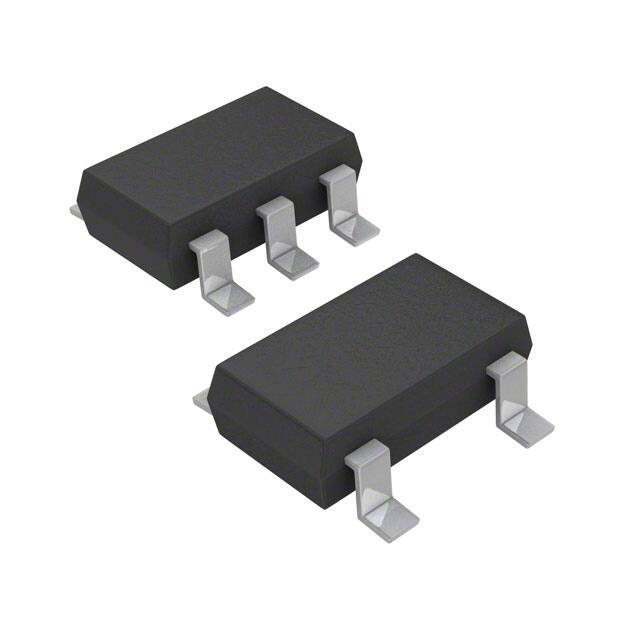
These powerhouses are selected based on projected revenue, market dominance in AI infrastructure, and technological leadership:
1. NVIDIA
2. TSMC
3. Broadcom
4. Samsung Electronics
5. Intel
6. Qualcomm
7. AMD
8. Texas Instruments
9. Micron Technology
10. Analog Devices
Market Outlook: The $975 Billion Opportunity
Beyond this ranking, the broader global integrated circuit (IC) industry is poised for unprecedented growth in 2026, with market forecasts predicting sales approaching $975 billion—a remarkable 26% year-over-year increase.
As artificial intelligence, edge computing, and advanced memory technologies reshape the semiconductor landscape, understanding the dynamics behind these leaders has never been more critical. Whether you're sourcing components for next-generation products, evaluating investment opportunities, or simply staying ahead of tech trends, the following comprehensive analysis reveals why these powerhouses are driving innovation—and which emerging challengers are threatening to disrupt the status quo.
Understanding the 2026 IC Market Landscape
The semiconductor industry is experiencing a fundamental transformation driven by artificial intelligence workloads, which are creating sustained demand patterns that break historical boom-and-bust cycles. According to the World Semiconductor Trade Statistics (WSTS), the global IC market will reach unprecedented heights in 2026, with growth across all regions and product categories.
"AI-driven demand is fundamentally altering the semiconductor supply chain, with high-bandwidth memory (HBM) penetration surging from 14% to 40%, creating opportunities and challenges for established manufacturers and newcomers alike." — PwC Semiconductor Industry Outlook 2026
Key Market Drivers for 2026
AI Acceleration: Artificial intelligence chip demand continues explosive growth, with 93% of industry leaders expecting revenue increases
Memory Chip Renaissance: A global memory shortage is driving prices upward, benefiting DRAM and NAND manufacturers
Edge Computing Expansion: On-device AI training and adaptive learning push edge semiconductor demand
Advanced Process Nodes: The race to 2nm and below intensifies manufacturing competitiveness
Supply Chain Realignment: Geopolitical factors and trade policies reshape foundry partnerships
Top 10 Integrated Circuit Manufacturers 2026: Global Rankings
1. NVIDIA Corporation — The AI Chip Dominator
2026 Projected Revenue: $165+ billion
Market Specialization: AI accelerators, GPU architecture, data center chips
Market Cap Position: #1 globally ($4.16 trillion)
NVIDIA maintains its commanding position as the world's most valuable semiconductor company, driven by insatiable demand for its AI training and inference chips. The company's Hopper and next-generation Blackwell architectures dominate data center AI workloads, with customers including every major cloud provider and enterprise AI deployment. Major financial analyst identifies NVIDIA as their top semiconductor pick for 2026, citing continued AI infrastructure buildout.
Competitive Advantages:
CUDA software ecosystem creates virtually insurmountable moat
62% revenue growth trajectory maintained through Q3 2025
Leadership in emerging AI inference and edge AI markets
2. Taiwan Semiconductor Manufacturing Company (TSMC) — The Foundry Titan
2026 Projected Revenue: $140+ billion
Foundry Market Share: 71% (Q3 2025)
Market Cap Position: #3 globally ($1.52 trillion)
TSMC's dominance in semiconductor manufacturing is nothing short of extraordinary, commanding a "jaw-dropping" 71% share of the global pure-play foundry market. The company giant manufactures chips for Apple, NVIDIA, AMD, and virtually every major fabless semiconductor company. Its investment in cutting-edge 2nm process technology positions it to maintain leadership through 2026 and beyond.
Key Differentiators:
Unmatched advanced process node expertise (3nm, 2nm)
18.5% quarter-over-quarter revenue growth in Q2 2025
Strategic partnerships with all major chip designers
Geographic expansion with global fabs reducing concentration risk
3. Broadcom Inc. — The Diversification Master
2026 Projected Revenue: $57+ billion
Market Cap Position: #2 globally ($1.61 trillion)
Product Portfolio: Networking chips, custom AI accelerators, infrastructure semiconductors
Broadcom's strategic diversification across networking, broadband, wireless, and custom silicon makes it one of the most resilient IC manufacturers. The company supplies critical infrastructure chips for data centers, 5G networks, and enterprise systems. Market analysts list Broadcom among semiconductor picks for 2026, highlighting its exposure to AI infrastructure spending.
4. Samsung Electronics — The Integrated Powerhouse
2026 Projected Revenue: $70+ billion (semiconductor division)
Foundry Market Share: 8.1% (declining from 9.1%)
Memory Leadership: #1 global memory chip producer
Samsung reclaimed its position as a top-tier semiconductor vendor in 2024, leveraging its strength in memory chips (DRAM and NAND) alongside its foundry operations. However, the company faces challenges in advanced logic manufacturing, with its foundry market share declining as TSMC expands dominance. Samsung's memory business remains exceptionally strong, benefiting from the 2026 memory shortage driven by AI demand.
Challenge Alert: Samsung has experienced delays in advancing to cutting-edge process nodes, with its 2nm technology lagging TSMC's timeline.
5. Intel Corporation — The Comeback Contender
2026 Projected Revenue: $63+ billion
Market Position: x86 architecture leader, emerging foundry player
Strategic Focus: IDM 2.0 transformation, process technology catch-up
Intel's ambitious turnaround strategy under CEO Pat Gelsinger aims to restore its semiconductor manufacturing leadership.. The company's Intel Foundry Services initiative positions it to compete with TSMC and Samsung, though current foundry market share remains below 5%. Intel's strength in CPU architecture and strategic funding provide tailwinds for 2026 growth.
Strengths:
Dominant position in data center and PC processors
Significant government manufacturing incentives
Advanced packaging technologies (Foveros, EMIB)
Weaknesses:
Delayed process node transitions (Intel 18A/20A)
Losing market share to AMD in CPUs and NVIDIA in AI accelerators
Foundry operations remain unprofitable in near term
6. Qualcomm Incorporated — The Mobile IC King
2026 Projected Revenue: $44+ billion
Market Leadership: Mobile SoC design, 5G modem technology
IC Design Market Share: 24%
Qualcomm dominates smartphone processors and wireless connectivity chips, with its Snapdragon platform powering the majority of premium Android devices. The company's expansion into automotive, IoT, and PC processors (Snapdragon X Elite) diversifies revenue beyond handsets. Qualcomm's licensing business model for wireless patents adds high-margin revenue streams unavailable to pure-play manufacturers.
7. Advanced Micro Devices (AMD) — The Innovation Challenger
2026 Projected Revenue: $28+ billion
Product Focus: CPUs, GPUs, data center accelerators
Market Cap: $248.87 billion
AMD has transformed from an Intel challenger to a diversified semiconductor powerhouse, competing effectively in CPUs, GPUs, and AI accelerators. The company's EPYC server processors have captured significant data center market share, while its MI300 series AI accelerators provide alternatives to NVIDIA's offerings. AMD's fabless model leverages TSMC's manufacturing excellence without capital-intensive fab investments.
8. Texas Instruments (TI) — The Analog Leader
2026 Projected Revenue: $18+ billion
Market Position: #1 in analog ICs (19% market share)
Segment Focus: Industrial, automotive, personal electronics
Texas Instruments reigns supreme in the analog semiconductor market, a segment less glamorous than AI chips but absolutely critical for virtually every electronic device. TI's broad product portfolio (80,000+ analog and embedded processing products) and exceptional technical support create high barriers to entry. The analog semiconductor market is projected to reach $180 billion by 2034, providing sustained growth opportunities.
Why TI Excels in Analog:
Decades of analog design expertise impossible to replicate quickly
Manufacturing scale advantages reduce costs
Long product lifecycles (10-20+ years) generate predictable revenue
Diversified customer base across automotive, industrial, and consumer segments
9. Micron Technology — The Memory Specialist
2026 Projected Revenue: $32+ billion
Product Focus: DRAM, NAND flash, high-bandwidth memory (HBM)
Market Cap: Major player in $240+ billion memory market
Micron is a leading global memory chip manufacturer, positioned to capitalize on the 2026 memory shortage crisis. The company's expertise in high-bandwidth memory (HBM)—critical for AI accelerators—makes it indispensable to data center growth. IDC forecasts that 2026 DRAM and NAND supply growth will be constrained below historical norms at 16% and 17% respectively, creating pricing power for Micron.
10. Analog Devices Inc. (ADI) — The Precision IC Expert
2026 Projected Revenue: $12+ billion
Market Share: 6.31% in analog/mixed-signal segment
Differentiation: High-performance analog, RF, and power management
Analog Devices specializes in high-performance analog, mixed-signal, and digital signal processing ICs for demanding applications in industrial, automotive, communications, and healthcare sectors. ADI's acquisition of Maxim Integrated expanded its addressable market and product portfolio. The company's precision analog technologies enable critical functions in everything from autonomous vehicles to 5G base stations.
Emerging Trends Reshaping IC Manufacturing in 2026
The AI-Driven Memory Crisis
A global memory shortage is emerging in late 2025, with profound implications for 2026. AI workloads consume unprecedented amounts of high-bandwidth memory, with a single AI training cluster requiring more memory capacity than thousands of traditional servers. This structural demand shift is altering memory chip economics:
HBM penetration surges from 14% to 40% of the memory market
Average memory chip prices projected to rise 15-25% in 2026
Supply constraints emerge despite capacity expansion efforts
Long-term supply agreements become critical for AI infrastructure builders
The 2nm Node Battle
The race to manufacture chips at 2-nanometer process technology intensifies in 2026. TSMC leads with production ramps beginning in 2025, Samsung targets 2026-2027 deployment, and Intel's 18A node (equivalent to ~2nm) faces crucial validation milestones. Advanced process nodes deliver 20-30% performance improvements and similar power efficiency gains—critical for mobile, automotive, and edge AI applications.
Foundry Price Hikes and Supply Chain Pressure
Major foundries including TSMC are implementing price increases of 5-10% in 2026, driven by astronomical capital expenditures for advanced process nodes (each new fab costs $15-20 billion) and persistent supply-demand imbalances in leading-edge capacity. These increases flow through to fabless chip designers, potentially impacting device pricing across consumer electronics, automotive, and enterprise hardware.
Common Misconceptions About IC Manufacturers
Myth #1: "All Semiconductor Companies Make Their Own Chips"
Reality: The industry has bifurcated into fabless designers (NVIDIA, AMD, Qualcomm) who outsource manufacturing, pure-play foundries (TSMC) who make chips for others, and integrated device manufacturers or IDMs (Intel, Samsung, Texas Instruments) who design and manufacture internally. Each model has distinct advantages—fabless companies avoid massive capital expenditures, while IDMs control their entire supply chain.
Myth #2: "Bigger Process Nodes Are Always Inferior"
Reality: While leading-edge 2nm chips grab headlines, mature process nodes (28nm, 40nm, 65nm) remain critical for analog chips, power management, and automotive applications where absolute performance is less critical than reliability, cost, and power efficiency. Texas Instruments' success demonstrates that technology leadership isn't always about the smallest transistors.
Myth #3: "Memory Chips Are Commodities with Low Margins"
Reality: While DRAM and NAND flash historically experienced cyclical boom-bust pricing, specialized memory like HBM commands premium pricing with gross margins exceeding 50%. AI-driven demand is fundamentally changing memory economics, with sustained high prices expected through 2026 and beyond.
IC Manufacturer Selection Checklist for Decision-Makers
When evaluating IC manufacturers for partnership, investment, or component sourcing, consider these critical factors:
For Component Sourcing & Design-Ins:
Product Roadmap Alignment: Does the manufacturer's technology roadmap match your 3-5 year product plans?
Supply Chain Stability: What is their track record for on-time delivery during shortage periods?
Technical Support Quality: Do they provide robust reference designs, evaluation boards, and engineering assistance?
Second-Source Availability: Are alternative suppliers available for critical components to mitigate risk?
Longevity Commitment: What is their typical product lifecycle, especially critical for industrial/automotive applications?
For Investment Decisions:
Market Position: Is the company gaining or losing share in growing segments?
R&D Investment: Top manufacturers invest 15-20% of revenue into R&D—below 10% signals competitive risk
Capital Efficiency: Fabless models offer higher returns on invested capital but less supply chain control
Diversification: Exposure to multiple end markets (automotive, industrial, consumer, data center) reduces cyclical risk
Geopolitical Exposure: Manufacturing and revenue concentration in single countries increases regulatory and trade policy risks
Purchase Recommendations: Matching Your Needs to Manufacturers
For AI/Machine Learning Applications:
Best Choices: NVIDIA (training & inference), AMD (cost-competitive inference), Broadcom (custom AI accelerators)
Why: These manufacturers offer proven AI architectures with software ecosystems, though premium pricing applies
For Automotive Electronics:
Best Choices: Texas Instruments (analog/power management), NXP Semiconductors (automotive processors), Infineon
Why: Automotive-grade qualification, long product lifecycles (15+ years), and functional safety certifications
For Mobile/Portable Devices:
Best Choices: Qualcomm (premium Android), MediaTek (value segments), Apple (vertical integration for iOS)
Why: Optimized power efficiency, integrated modems, and comprehensive IP portfolios
For Industrial IoT & Edge Computing:
Best Choices: Microchip Technology, Texas Instruments, STMicroelectronics
Why: Broad microcontroller portfolios, excellent development tools, reliable long-term supply
Real-World Experience: Navigating the Memory Shortage
Case Study: Data Center Operator's 2025-2026 Challenge
"Our AI infrastructure expansion plans hit a wall in Q4 2025 when HBM lead times extended to 12+ months. We learned the hard way that memory allocation requires forecasting 18 months ahead and securing capacity commitments directly with manufacturers like Micron and SK Hynix. Spot market pricing for HBM reached 3x contracted rates."
— Cloud Infrastructure VP at Global 500 Technology Company
Lessons Learned:
Strategic components require direct manufacturer relationships, not just distributor channels
Long-term supply agreements sacrifice flexibility but guarantee availability
Design flexibility (supporting multiple memory vendors) reduces dependency risk
Early engagement with manufacturers' roadmaps enables better capacity planning
Thought-Provoking Questions for Your Strategy
How exposed is your product roadmap to single-source IC manufacturers? A supply disruption at TSMC or specialized analog supplier could delay products by 12-24 months—do you have mitigation strategies?
Are you designing for today's chips or tomorrow's capabilities? The 18-month design cycle means today's selections must anticipate 2026-2027 component availability and performance.
Does your business model account for component price inflation? With foundry prices rising 5-10% and memory costs increasing 15-25%, can you pass costs through or must you absorb them?
Is your investment portfolio positioned for structural AI demand vs. cyclical recovery? AI-driven chip demand represents a long-term structural shift, not a cyclical upswing—are you investing accordingly?
Conclusion: Navigating the $1 Trillion Semiconductor Future
The integrated circuit manufacturing landscape entering 2026 is characterized by unprecedented consolidation at the leading edge alongside continued diversification in specialized segments. TSMC's 71% foundry market share represents near-monopoly control over advanced chip production, creating both opportunities and vulnerabilities for the global technology ecosystem. Meanwhile, the AI-driven transformation of chip demand—from cyclical to structural growth—is reshaping long-standing industry dynamics.
For technology companies and engineers, the key takeaway is proactive supply chain management: securing capacity commitments for strategic components, designing in flexibility for multiple sources, and engaging manufacturers 18-24 months before production needs. For investors, the trillion-dollar semiconductor industry offers compelling opportunities, but selectivity matters—companies with defensible competitive positions in growing markets (AI chips, specialized memory, analog/power management, advanced manufacturing equipment) should outperform commodity chip makers.
The top 10 IC manufacturers profiled here collectively represent over 70% of global semiconductor revenue and virtually all leading-edge manufacturing capacity. Their technology roadmaps, capacity investments, and strategic partnerships will determine which innovations reach the market—from autonomous vehicles to augmented reality to medical diagnostics. Understanding these industry leaders isn't just about tracking market rankings; it's about anticipating the technological capabilities that will shape the next decade.
As the industry approaches the $1 trillion milestone in 2026-2027, one certainty remains: semiconductors have never been more critical to economic competitiveness, national security, and technological progress. The manufacturers leading this charge aren't just building chips—they're building the future.
Next Steps for Readers
For Engineers: Evaluate your current designs for supply chain resilience—can you source critical ICs from alternative manufacturers if needed?
For Procurement Teams: Review 2026 component forecasts and initiate early supplier engagement for long-lead items, especially memory and advanced process nodes
For Investors: Consider portfolio exposure to semiconductor capital equipment manufacturers (ASML, Lam Research, KLA) who supply the IC manufacturers and benefit from industry growth regardless of competitive dynamics
For Business Leaders: Assess how chip availability and pricing trends might impact your product roadmap, and develop contingency plans for extended lead times or allocation scenarios
Stay informed: The semiconductor industry evolves rapidly—quarterly earnings reports from TSMC, Samsung, and Intel provide early indicators of market trends, while memory spot pricing (tracked by DRAMeXchange and TrendForce) signals supply-demand dynamics months before impacting finished device prices.
- 1.
What is the difference between IC manufacturers and semiconductor companies?
The terms are often used interchangeably, but technically all ICs (integrated circuits) are semiconductors, while not all semiconductors are ICs. IC manufacturers specifically produce chips with multiple integrated components (transistors, resistors, capacitors) on a single substrate, while the broader semiconductor category includes discrete components, sensors, and power devices. The top companies in our ranking all manufacture ICs, though many also produce other semiconductor products.
- 2.
Why is TSMC so dominant if it doesn't design any chips?
TSMC's pure-play foundry model allows it to serve all chip designers without competing as a design rival, making companies like Apple, NVIDIA, and AMD comfortable sharing their most advanced designs. This business model, combined with unmatched process technology expertise and $40+ billion annual capital investments, creates a competitive moat that rivals struggle to overcome. TSMC essentially enables the entire fabless semiconductor ecosystem.
- 3.
How will the 2026 memory shortage affect consumer prices?
Memory typically represents 15-30% of smartphone and PC costs, so a 20% memory price increase could translate to 3-6% retail price increases for devices, depending on manufacturers' ability to absorb costs or offset with other component savings. Premium devices with maximum memory configurations (1TB+ storage, 16GB+ RAM) will see the largest absolute price increases. Expect smartphone prices to increase $30-80 and laptop prices $50-150 in 2026 compared to late 2024 pricing.
- 4.
Which IC manufacturers are best positioned for long-term investment?
Leading investment firms's top picks for 2026 include NVIDIA, Broadcom and Analog Devices—companies with exposure to AI infrastructure, diversified end markets, and strong competitive positions. TSMC offers foundry exposure without picking winning chip designers. However, investment suitability depends on your risk tolerance and portfolio diversification—semiconductor stocks are notoriously volatile.Please conduct your own due diligence before investing.
- 5.
With traditional transistor scaling slowing down, how are manufacturers driving performance gains in 2026?
As we approach the physical limits of shrinking transistors (the "End of Moore's Law"), the competitive battleground has shifted to Advanced Packaging and Heterogeneous Integration. Instead of trying to fit everything onto a single, massive silicon die, manufacturers like TSMC, Intel, and Samsung are using "Chiplet" technology—stacking multiple smaller, specialized chips vertically (3D stacking) or side-by-side. This approach allows for higher bandwidth, lower power consumption, and better yields. In 2026, a manufacturer's ranking depends as much on their packaging technology (like TSMC's CoWoS or Intel's Foveros) as it does on their ability to produce 2nm transistors.
- 6.
How are IC manufacturers addressing the environmental impact of massive capacity expansion?
Sustainability has become a critical competitive metric in 2026. Semiconductor manufacturing is notoriously resource-intensive, consuming vast amounts of water and electricity. Leading manufacturers like TSMC, Samsung, and Intel are aggressively implementing "Green Fabs," targeting 100% renewable energy usage and near-total water recycling rates. Furthermore, the innovation focus has shifted to energy efficiency at the chip level; new power-management ICs and low-power architectures are being designed specifically to reduce the carbon footprint of AI data centers, which is a top priority for enterprise customers.
View More
 Paul George
Richard Electronics guest author, a Mechatronics engineer and a professional researcher, designer, developer and manufacturer for 3d Cad and PCB. I believe in efficiency, effectiveness and quality of work, and my aim is to provide complete one-roof solutions to complex mechanical and electrical design systems. I have a well-equipped lab with state-of-the-art technology for doing research and providing.

02 April 2026
02 April 2026

19 January 2026
29 December 2025
25 October 2025